Client Success
Wenatchee High School Reaches Its EUI Target Without a Capital Project
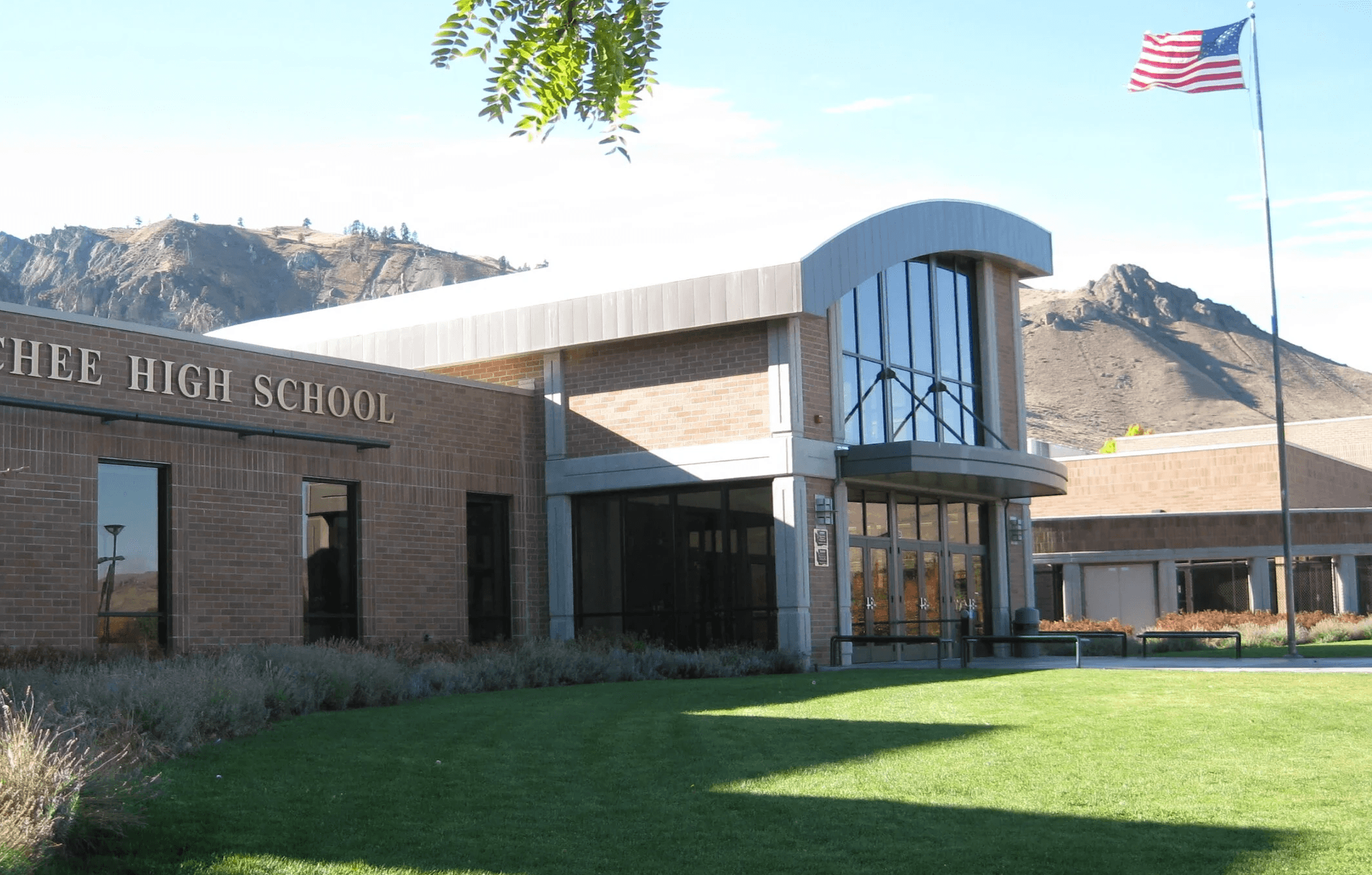
Wenatchee High School is a 292,362-square-foot facility built during the Nixon era, with original equipment still operating according to the client source. That combination created a difficult starting point: an older, large building with a demanding Clean Buildings target and limited room for facility staff to add another intensive workstream.

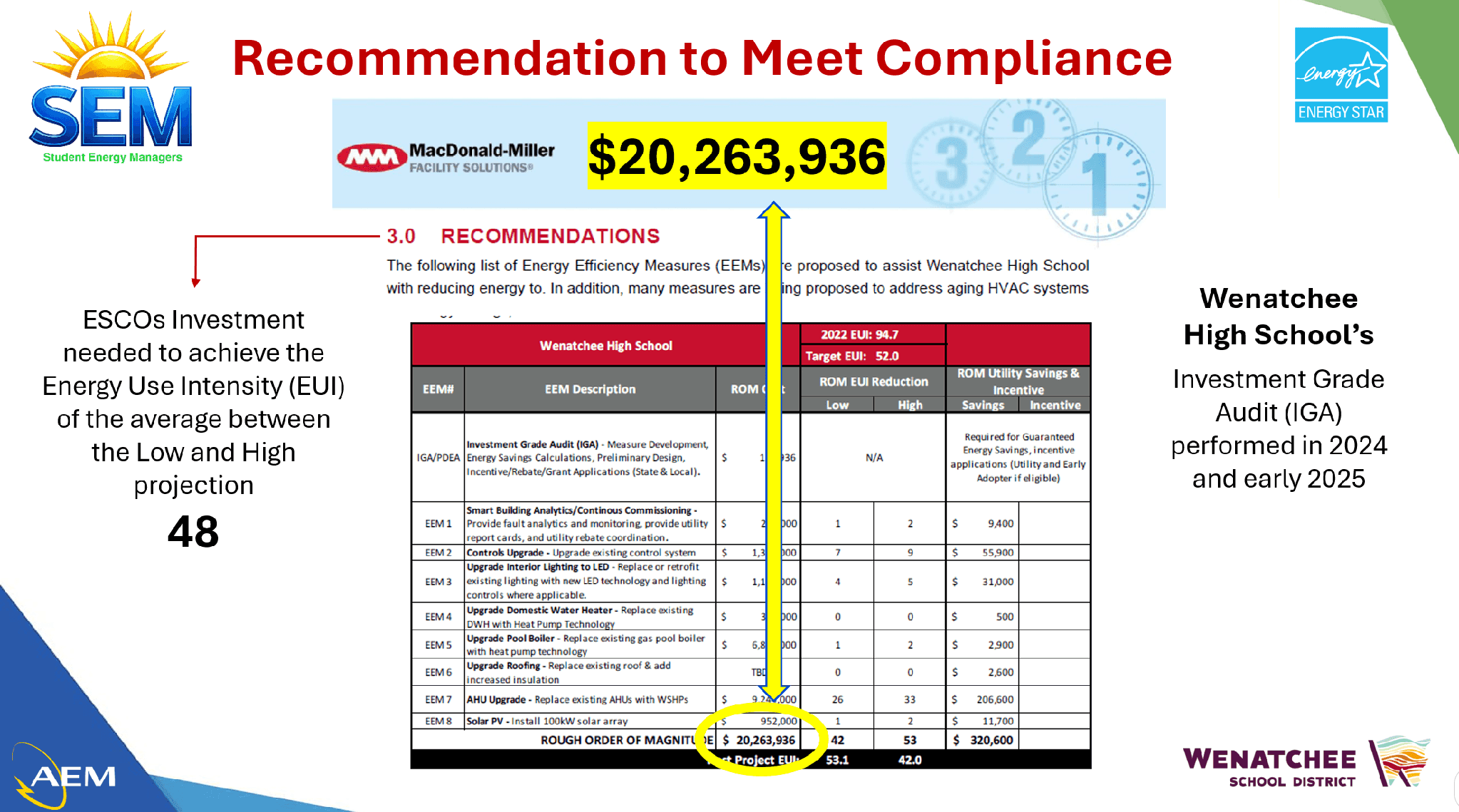
An investment grade audit outlined a capital route that exceeded $20 million. The accompanying source chart lists a $20,263,936 energy service company investment and a planned path to the building’s energy target. That audit is important context. It shows the scale of one proposed equipment-focused response, but it does not mean every measure in the audit was unnecessary or that operational work replaces future capital needs.
SEM pursued the operating side of the problem. High school and college interns worked with district staff to examine data, support better decisions, and reinforce conservation practices. The focus was on how the existing building was scheduled and used, and on the routine actions that could be changed without waiting for a major construction project.
The reported result was a weather-normalized EUI of 48 against a target of 49. The source chart records a 50 percent reduction in energy use and $0 in capital investment for that result. It also records that the building achieved compliance. These figures describe the SEM reporting period and should not be read as a promise that every older building can reach its target without capital work.
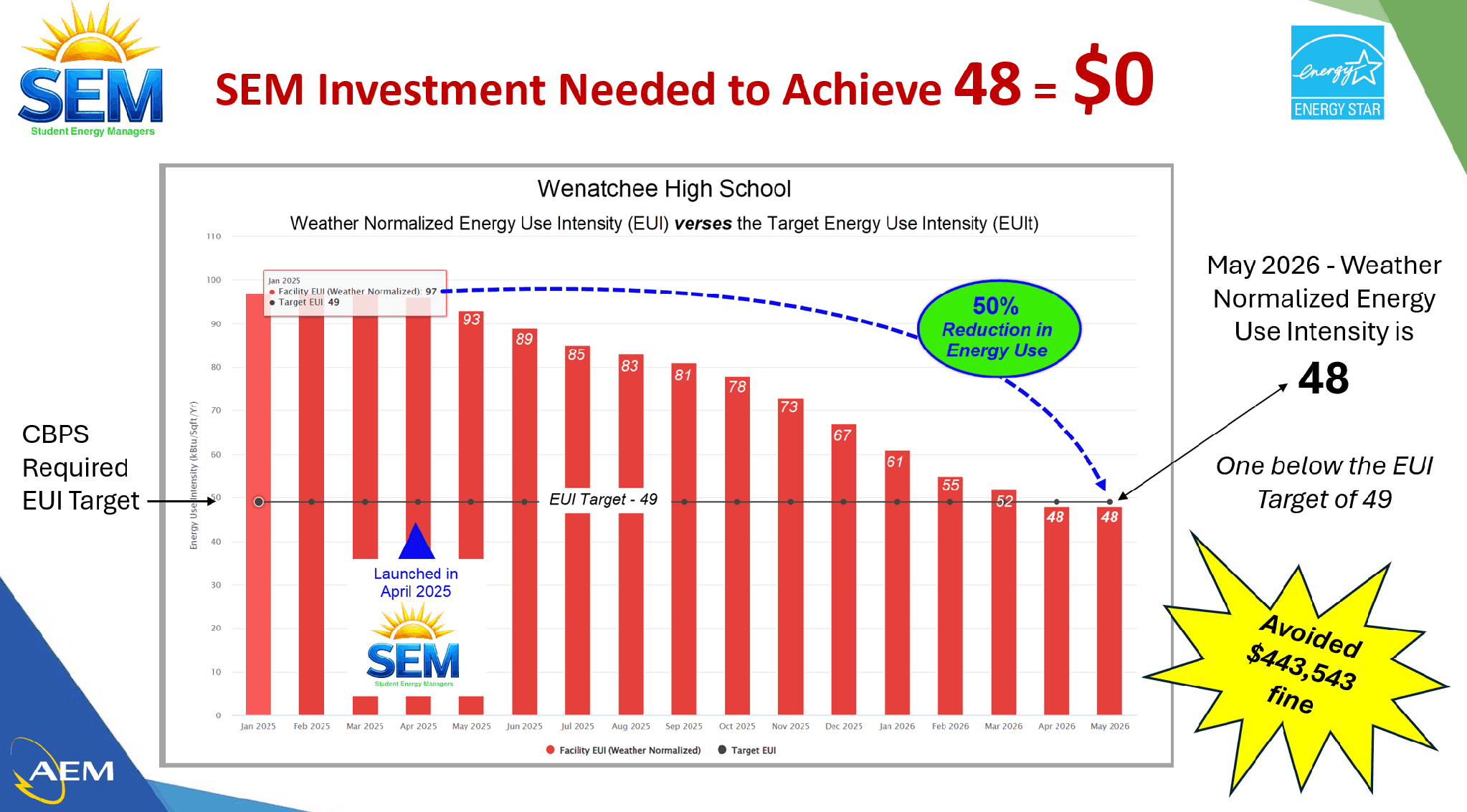
The client document states that achieving compliance avoided a $443,543 noncompliance penalty. Presenting that figure alongside the EUI matters because the two measures answer different questions. The EUI result shows how the building performed. The penalty figure describes the documented consequence the district avoided after reaching compliance.
Bryan Brockie, the district’s Director of Maintenance and Operations, credited the interns with taking on work his staff did not have time to complete. “What these SEM interns lack in experience is more than made up for in their willingness to be coached, so they can successfully operate at a high level,” he said. He also called mentoring motivated young people the most rewarding experience of his working career.
Wenatchee High School demonstrates why owners should examine operations before assuming the only path is a large capital project. Accurate data and consistent action can clarify what the existing building is capable of and which remaining investments are actually necessary. The story also shows the conditions behind the outcome: committed facility staff, coached students, reliable measurement, and attention sustained over time.